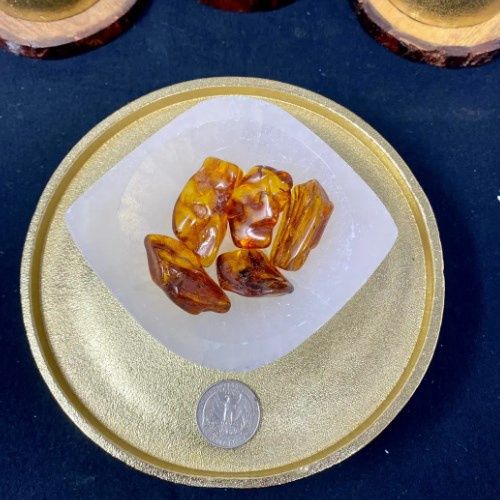
Amber Baltic High Quality .75"-1.25"
SKU 54040
$6.99
In stock: 235 available
1
Product Details
Amber Baltic High Quality .75"-1.25"
Mineral Information:
Baltic amber is fossilized tree resin that formed approximately 35–50 million years ago in the forests that once covered parts of Northern Europe. Unlike tree sap, which transports nutrients through a tree, resin is a sticky protective substance that trees produce to seal wounds and defend against insects and disease. Over millions of years, some of this resin was buried, compressed, and chemically transformed into amber.
Baltic amber is the most abundant and well-known amber in the world, accounting for roughly 80–90% of the world's known amber deposits.
Where does it come from?
The name comes from the Baltic Sea region, where waves and coastal erosion continue to uncover pieces today.
Major sources include:
- Poland
- Lithuania
- Latvia
- Russia
- Germany
Large deposits also occur beneath the seafloor and in ancient sediments surrounding the Baltic region.
One of its defining features is that it contains 3–8% succinic acid, a natural organic compound.
Because of this, Baltic amber is sometimes referred to as succinite, although not every piece marketed as Baltic amber has been chemically tested.
Its characteristics include:
- Warm golden glow
- Lightweight
- Softer than most gemstones
- Pleasant feel in the hand
- Can become electrically charged when rubbed (the ancient Greeks discovered this property—our word electricity ultimately comes from the Greek word for amber, elektron).
Baltic amber occurs in many colors, including:
- Honey (most common)
- Golden yellow
- Cognac
- Butterscotch
- Orange
- Cherry red (often naturally darkened or heat-treated)
- Green (rare and often enhanced)
- White ("bone amber")
- Nearly black
Many pieces display beautiful internal cloudiness, bubbles, or flowing patterns created during fossilization.
Inclusions
Perhaps the most famous feature of amber is its ability to preserve ancient life.
Sometimes resin trapped:
- insects
- spiders
- plant fragments
- pollen
- feathers
- tiny lizards (extremely rare)
These inclusions provide remarkable snapshots of ecosystems that existed tens of millions of years ago and are valuable to paleontologists.
Metaphysical Meaning:
Baltic amber is often associated with:
- warmth and vitality
- emotional healing
- protection
- absorbing negative energy
- calming stress
- encouraging optimism
Because it feels warm, light, and organic compared with many crystalline gemstones, many people find it comforting to hold or wear.
Mineral Care:
Amber is a relatively soft and fragile gemstone compared to many other gemstones. It has a hardness rating of approximately 2 to 2.5 on the Mohs scale, which means it is quite susceptible to scratching and damage.
The fragility of amber is primarily due to its organic composition. As fossilized tree resin, amber is composed of complex organic compounds and lacks the crystal structure found in most minerals. This organic composition makes amber relatively soft and more prone to wear and damage.
Amber is also sensitive to heat and chemicals. It can be easily damaged or discolored by high temperatures, direct sunlight, or exposure to certain chemicals, such as solvents or cleaning agents. Additionally, prolonged exposure to water or excessive moisture can cause amber to deteriorate and lose its luster over time.
To protect the fragility of amber, it is recommended to handle it with care and avoid exposing it to harsh conditions. Here are some tips for caring for amber:
- Avoid exposing amber to high temperatures or direct sunlight for prolonged periods.
- Keep amber away from chemicals, including perfumes, lotions, and cleaning agents.
- Clean amber gently using a soft cloth or a mild soap solution, avoiding abrasive materials.
- Store amber in a soft pouch or a jewelry box to prevent scratching and protect it from excessive moisture.
By following these precautions and handling amber with care, you can help preserve its beauty and longevity.
It's important to note that even with proper care, amber can still develop small surface scratches or wear over time due to its relative softness. However, these minor imperfections can often add to the character and charm of the gemstone, showcasing its natural history and journey through time.
Disclaimer:
No information here is intended to diagnose, treat or cure ailments or afflictions of any kind. One should always consult a medical professional if a serious issue presents itself.
Save this product for later
Amber Baltic High Quality .75"-1.25"
Powered by Lightspeed
Display prices in:USD