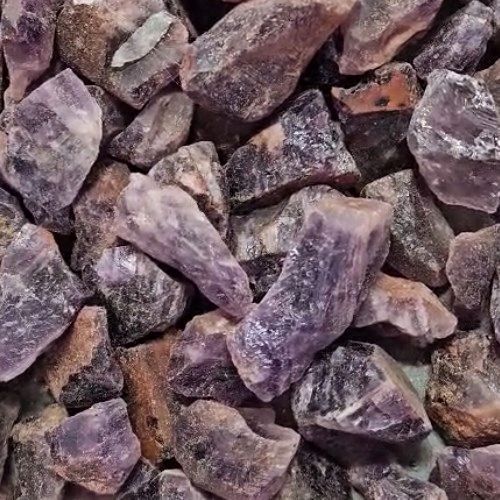
Amethyst Red Rough 1"-1.25"
Share
SKU 34377
$1.99
In stock: 50 available
1
Product details
Amethyst Red Rough 1"-1.25"
Mineral Information:
Amethyst is a violet variety of quartz. The name comes from the Koine Greek αμέθυστος amethystos from α- a-, "not" and μεθύσκω (Ancient Greek) methysko / μεθώ metho (Modern Greek), "intoxicate", a reference to the belief that the stone protected its owner from drunkenness. Ancient Greeks wore amethyst and carved drinking vessels from it in the belief that it would prevent intoxication. Until the 18th century, amethyst was included in the cardinal, or most valuable, gemstones (along with diamond, sapphire, ruby, and emerald), but since the discovery of extensive deposits in locations such as Brazil, it has lost most of its value. It is now considered a semiprecious stone. Amethyst is often used in jewelry and is the traditional birthstone for February.
Red amethyst is a unique and rare variety of amethyst that displays a combination of red and purple colors. It is characterized by the presence of hematite inclusions within the amethyst crystals, which gives the stone its distinctive reddish hue. The iron content in the hematite contributes to the red coloration.
The specific color and intensity of red amethyst can vary, ranging from lighter pinkish-red tones to deeper and more vibrant shades of red. The reddish coloration can be found in various parts of the amethyst crystals or distributed unevenly throughout the stone, creating an interesting and eye-catching appearance.
Metaphysical Meaning:
Red Amethyst, with its addition of Hematite, that brings the amethyst additional elements that help with courage, tenacity, inner strength, romance, and passion. Red Amethyst assists with healsing the Root and Crown Chakras and helps with a lost sense of self worth.
Mineral Care:
Amethyst is a relatively durable gemstone with a hardness rating of 7 on the Mohs scale. This means it is moderately resistant to scratching and damage. However, while amethyst is relatively durable, it is not completely immune to fragility. Here are some factors to consider:
-
Cleavage: Amethyst, like other quartz crystals, has a tendency to exhibit cleavage. Cleavage refers to the tendency of a crystal to break along specific planes. While amethyst is generally resistant to cleavage, care should be taken to avoid subjecting it to rough handling or impact that could potentially cause it to break or chip along these planes.
-
Fractures and Inclusions: Amethyst may contain internal fractures or inclusions that weaken its structure. These fractures or inclusions can make the gemstone more susceptible to damage or breakage if subjected to excessive force or pressure. It's important to handle amethyst with care to avoid exacerbating any existing fractures or inclusions.
-
Heat and Chemical Sensitivity: Amethyst can be sensitive to high temperatures and rapid temperature changes. Extreme heat or thermal shock can cause the gemstone to fracture or break. Additionally, amethyst can be sensitive to certain chemicals and cleaning agents, which can cause discoloration or damage to the stone. It is advisable to avoid exposing amethyst to direct heat or harsh chemicals.
To protect the fragility of amethyst, it is recommended to handle it with care, avoiding rough handling, impacts, or exposure to extreme conditions. Storing amethyst separately or providing cushioning can help prevent accidental damage. Cleaning the gemstone gently using a soft cloth or mild soap solution is generally sufficient, avoiding the use of harsh chemicals or abrasive materials.
By treating amethyst with care and being mindful of its sensitivity to certain factors, you can help preserve its natural beauty and ensure its longevity.
Disclaimer:
No information here is intended to diagnose, treat or cure ailments or afflictions of any kind. One should always consult a medical professional if a serious issue presents itself.
Amethyst Red Rough 1"-1.25"
Share
Powered by Lightspeed
Display prices in:USD