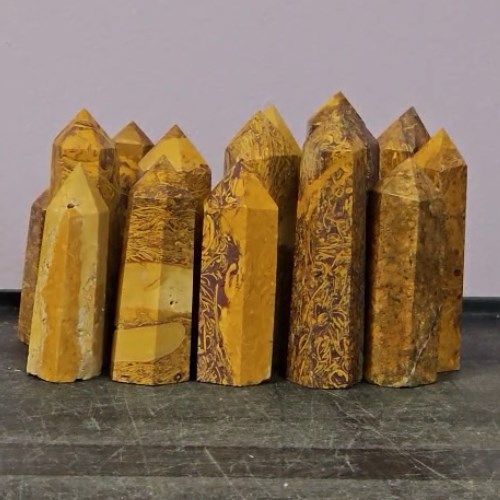
Arabic Calligraphy Jasper Tower 2.25"-3.75" / 50-120g
Share
SKU 41734
$9.99
In stock: 15 available
1
Product details
Arabic Calligraphy Jasper Tower 2.25"-3.75" / 50-120g
Mineral Information:
Calligraphy stone, also known as script stone or coquina stone, is a unique and visually striking form of limestone. It is named for the intricate patterns and markings on its surface, which resemble elegant calligraphy or ancient script.
Calligraphy stone is formed from sedimentary deposits that contain fossilized shells, coral, and other organic materials. Over time, these materials become compacted and cemented together to create the distinctive texture and appearance of calligraphy stone.
The markings on calligraphy stone can vary in color, typically appearing as contrasting shades of brown, black, white, or gray. These patterns often resemble intricate lines, curves, or script-like characters, which give the stone its name.
Calligraphy stone is often used as a decorative or ornamental material due to its unique and aesthetic qualities. It is commonly crafted into polished or carved objects, such as spheres, eggs, sculptures, or jewelry. It is also used as a decorative accent in architecture and interior design, adding a touch of natural beauty and texture to spaces.
Metaphysical Meaning:
Calligraphy stone is used for creativity, spiritual growth, and grounding. It also offers a powerful protection against negativity, and reduces stress. Lastly it is used for creativity and to stimulate self-expression.
Mineral Care:
Calligraphy stone, like other forms of limestone, can be relatively fragile compared to harder and more durable stones. The fragility of calligraphy stone is influenced by a few factors:
-
Softness: Limestone, including calligraphy stone, is a relatively soft stone. It has a hardness of around 3 to 4 on the Mohs scale, which means it can be easily scratched or damaged by harder materials. This softness makes calligraphy stone more prone to surface wear and abrasion over time.
-
Porosity: Limestone is a porous stone, meaning it has small open spaces or pores within its structure. This porosity makes calligraphy stone more susceptible to damage from water, chemicals, or exposure to environmental factors. Liquids, especially acidic ones, can seep into the pores and cause discoloration, staining, or deterioration of the stone over time.
-
Sensitivity to acids: Calligraphy stone, being composed mainly of calcium carbonate, is sensitive to acids. Acidic substances such as lemon juice, vinegar, or certain cleaning products can cause chemical reactions that etch or dissolve the surface of the stone, leading to damage or loss of the distinctive markings and patterns.
To protect and care for calligraphy stone, it is important to handle it with care and avoid exposing it to excessive force, impact, or abrasive materials. It is advisable to clean calligraphy stone with mild, non-acidic cleansers and to avoid prolonged exposure to water or harsh chemicals. Additionally, it is recommended to store calligraphy stone in a safe place, away from other hard materials that could potentially scratch or damage it.
Regular cleaning and maintenance, using gentle methods and suitable cleaning agents, will help preserve the appearance and longevity of calligraphy stone.
Disclaimer:
No information here is intended to diagnose, treat or cure ailments or afflictions of any kind. One should always consult a medical professional if a serious issue presents itself.
Arabic Calligraphy Jasper Tower 2.25"-3.75" / 50-120g
Share
Powered by Lightspeed
Display prices in:USD