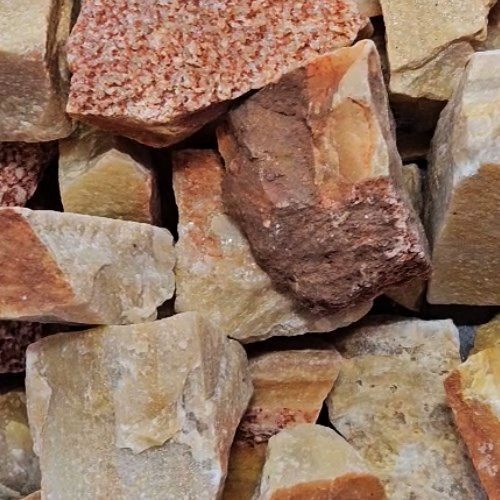
Aventurine Yellow Rough Stone 1.5"-2.5"
Share
SKU 42599
$1.99
In stock: 41 available
1
Product details
Aventurine Yellow Rough Stone 1.5"-2.5"
Mineral Information:
Yellow aventurine is a variety of aventurine, which is a type of quartzite that belongs to the chalcedony family. It is characterized by its yellow color, which can range from pale yellow to a deep golden hue. The yellow color in aventurine is typically caused by the presence of inclusions or impurities within the quartz matrix.
The word "quartzite" is often used by geologists to refer to rocks that are metamorphic in nature and comprised almost entirely of quartz. Due to the fact that it is composed almost entirely of quartz, quartz and quartzite are often used interchangably.
The specific inclusions that give yellow aventurine its color can vary. One common cause of the yellow color is the presence of iron oxide inclusions. These inclusions create the warm, golden-yellow tones in the stone. Other minerals or impurities, such as goethite or pyrite, can also contribute to the yellow coloration.
Metaphysical Meaning:
Yellow Aventurine is a stone that helps with self-reflection, increasing calmness, balance, optimism, and creativity. It also aids with prosperity. Yellow Aventurine is associated with the solar plexus chakra. Yellow aventurine is often associated with the solar plexus chakra, which is the energy center located in the upper abdomen. It is believed to help activate and balance the solar plexus chakra, promoting confidence, personal power, and self-esteem.
Mineral Care:
Yellow aventurine, like other varieties of quartz, is relatively durable and resistant to breakage. Quartz has a hardness of 7 on the Mohs scale, indicating its ability to withstand scratching and abrasion.
However, the fragility of yellow aventurine can depend on several factors, including the quality of the specimen, the specific inclusions causing the yellow color, and any structural weaknesses present.
If the inclusions within the yellow aventurine are delicate or have a lower hardness compared to quartz, they may be more prone to breakage. For example, if the yellow color is caused by softer minerals or impurities, such as goethite, these inclusions might be more susceptible to fracturing or chipping if subjected to excessive force or pressure.
Additionally, any structural weaknesses within the yellow aventurine specimen, such as fractures or natural cleavage planes, can increase its vulnerability to breakage. These weaknesses can create areas of susceptibility that may result in the stone being more fragile.
While yellow aventurine is generally durable, it is still recommended to handle it with care. Avoid exposing it to sharp impacts, extreme temperature changes, or rough handling that could potentially cause damage or breakage. Storing yellow aventurine in a protective pouch or wrapping it in a soft cloth can help prevent accidental damage.
It's important to note that the fragility of yellow aventurine can vary depending on the specific specimen, so it is advisable to assess each individual piece and take appropriate precautions to ensure its preservation.
Disclaimer:
No information here is intended to diagnose, treat or cure ailments or afflictions of any kind. One should always consult a medical professional if a serious issue presents itself.
Aventurine Yellow Rough Stone 1.5"-2.5"
Share
Powered by Lightspeed
Display prices in:USD