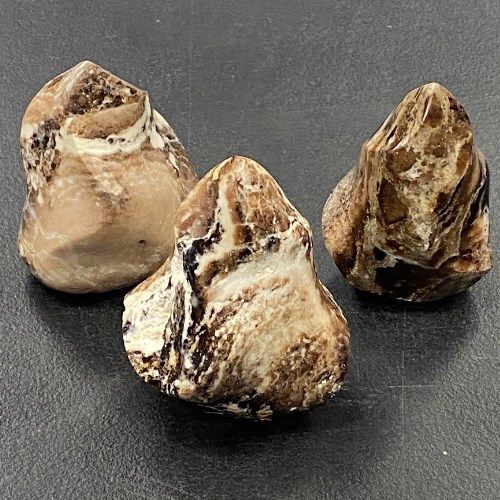
Opal Chocolate Brown Flame - Select
SKU 54695
$22.99
Sold out
Type
Please choose
Sold out
Product Details
Mineral Information:
Opal is a gemstone known for its unique play of color, which refers to the iridescent flashes of vibrant colors that can be observed when the stone is viewed from different angles. It is composed of hydrated silica, also known as silicon dioxide (SiO₂) with varying water content, and it belongs to the mineraloid group rather than being a true mineral.
Opal is formed from the interaction of water and silica in underground cavities or voids, such as within sedimentary rocks or volcanic environments. Over millions of years, as water containing dissolved silica seeps into these cavities and evaporates, it leaves behind deposits of silica spheres that stack and form a three-dimensional lattice-like structure. These spheres diffract light, resulting in the play of color for which opal is famous.
The play of color in opal arises due to the interference and diffraction of light as it passes through the microscopic gaps between the silica spheres. The size and arrangement of the spheres determine the colors visible in the opal, which can include various hues such as red, orange, green, blue, and violet. This phenomenon is referred to as opalescence.
Opals come in a wide range of colors and patterns, with each opal being unique in its play of color. Some opals exhibit a single color, while others display a vibrant array of colors in a pattern known as harlequin, pinfire, or floral. The play of color is highly valued and is a significant factor in determining the quality and desirability of opals.
Opals are found in various locations around the world, including Australia, Mexico, Ethiopia, Brazil, and the United States, among others. Australia, particularly the region of Lightning Ridge, is renowned for producing some of the most valuable and sought-after opals, including black opals.
Metaphysical Meaning:
Opal is associated with attributes such as inspiration, creativity, emotional healing, and enhancing intuition.
Mineral Care:
Opal is considered a relatively fragile gemstone compared to many other minerals and gemstones. Its fragility can be attributed to several factors:
Water Content: Opal contains a significant amount of water, usually ranging from 3% to 21% by weight. This high water content makes opal more susceptible to changes in temperature and humidity. Rapid temperature fluctuations or exposure to extreme heat can cause opal to crack or fracture due to the expansion and contraction of the water within the stone.
Internal Structure: Opal has a unique internal structure composed of stacked silica spheres, which create voids and air pockets within the gemstone. These voids weaken the overall structure of opal and make it more prone to damage. Opals can be fragile due to the presence of natural fractures, called "crazing," which can develop over time or from exposure to certain conditions.
Hardness: Opal has a relatively low hardness compared to other gemstones. On the Mohs scale, which measures a mineral's scratch resistance, opal typically ranges from 5.5 to 6.5. This means that opal can be scratched or abraded more easily compared to gemstones with higher hardness, such as sapphires or diamonds. Care should be taken to protect opal from contact with harder materials.
Sensitivity to Chemicals: Opal is sensitive to chemicals and acids. Exposure to household chemicals, detergents, cosmetics, and acidic substances can damage the surface or alter the appearance of opal. It is important to avoid contact with such substances and to remove opal jewelry before engaging in activities that involve exposure to chemicals.
To preserve the beauty and integrity of opal and minimize the risk of damage, it is important to handle it with care. Here are some general tips:
Avoid subjecting opal to rough treatment, impact, or pressure.
Store opal jewelry separately from other gemstones to prevent scratching.
Protect opal from extreme temperature changes and avoid exposing it to direct heat or prolonged sunlight.
Remove opal jewelry before engaging in activities that may pose a higher risk of damage, such as sports, gardening, or household chores.
Clean opal gently using mild soap and lukewarm water. Avoid ultrasonic cleaners or steam cleaning, as they can potentially damage opal.
Disclaimer:
No information here is intended to diagnose, treat or cure ailments or afflictions of any kind. One should always consult a medical professional if a serious issue presents itself.
Save this product for later
Opal Chocolate Brown Flame - Select
Powered by Lightspeed
Display prices in:USD